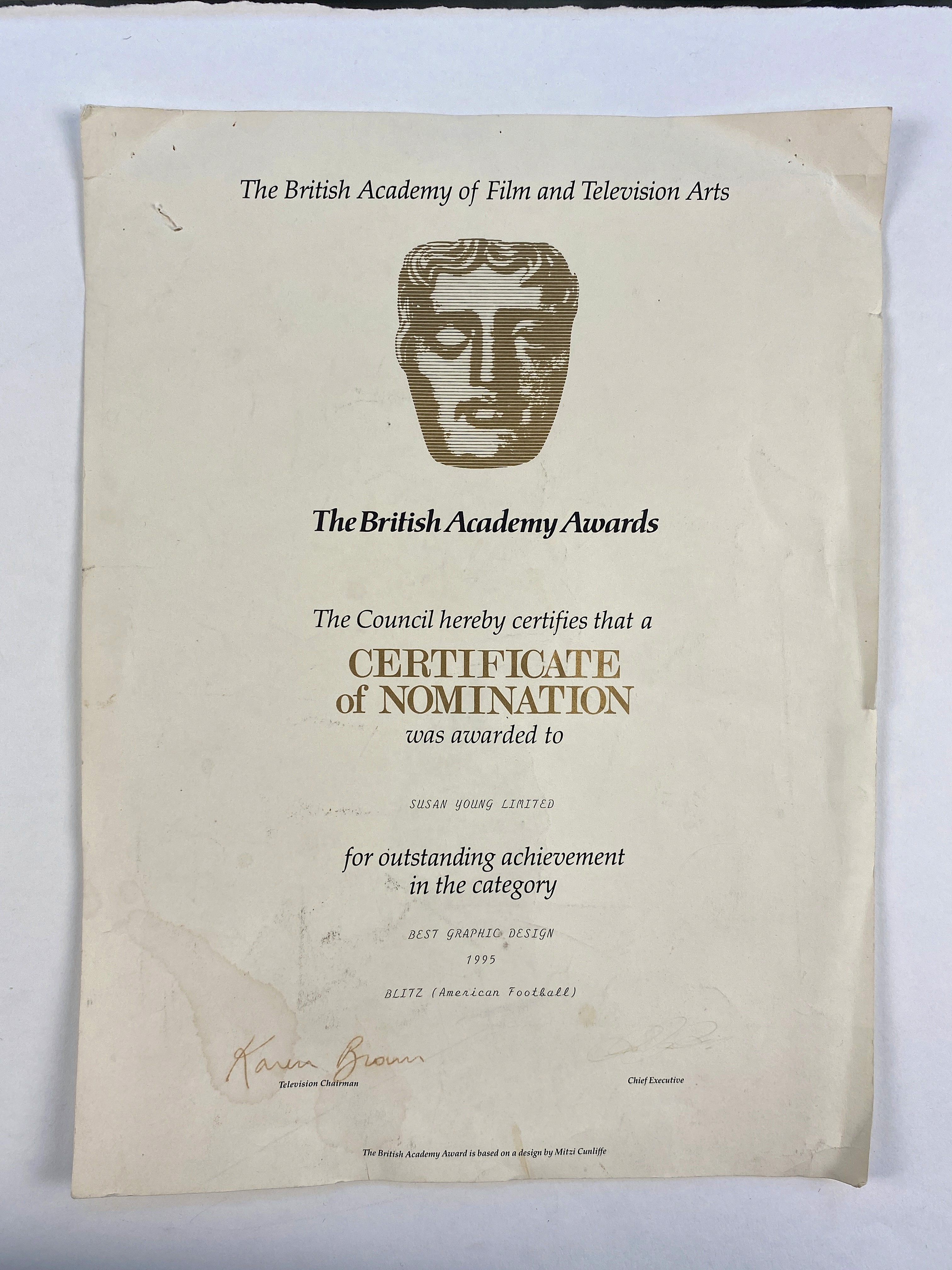
BAFTA nomination: Blitz (American Football)

Apr 14, 2025

American Football/Blitz

Bafta graphic design

sport graphics

Trans World Sport

hand injury

career ending

sport animation

Reflecting on my BAFTA nomination

I find it painful (but interesting) to look back on my career before my traumatic marriage, attempted murder, subsequent PTSD, hand injury, breakdown, and other traumas within the UK mental health system. I write about this in the forthcoming publication Autoethnographic Animation and the Metabolism of Trauma (Routledge), but here simply reflect on how animation, including these titles, helped me cope with these events.

The titles were commissioned by Trans World International for a bi-weekly show featuring American Football that screened on Channel 4 from 1994-1998. Initially the commission raised eyebrows in those who assumed I could only animate dance. Although not a sports fan, as I studied the game of American Football, I quickly realised it was full of dynamic movement and was as rewarding to animate as dance. And it was full of drama, which I highlighted by using my skills in animated metamorphosis to transform the Detroit Lions, Buffalo Bills, and Los Angeles Rams, from beast to man and back again, whilst pitched in internecine combat. I worked on this project for four years, incorporating into the body of the programme a combination of my pencil animation, 'negative' versions of the artwork, new animation, and short stings that uniquely identified every team in the NFL. I received a BAFTA nomination for Best Graphic Design in 1995 for the magazine version of this show titled 'Blitz (American Football).'

Background to commission

I started work on this commission in 1994, at the outset of my disastrous marriage to a psychopathic drug addict. For the entirely of my marriage, I was simultaneously working on this and other projects, whilst trying to survive a nightmare that perhaps only other partners, siblings, or parents of mentally ill addicts, will understand.

On 13th February 1996, my husband attempted to murder me. I instituted divorce proceedings immediately, but I remained traumatised, and sought psychological help from Dr B, an addiction specialist whom I'd been paying to treat my husband. Dr B wouldn't talk about what had happened and instead prescribed large doses of sedatives to help me sleep, and stimulants to wake me from the sedatives and enable me to work the next day. Dr B also became controlling. Looking at my diary about a year later, for 14 April 1996, the day of the BAFTA ceremony, my entry is terse:

"10am Dr B, increased Temazepam. Don't talk about [my husband]! Went to BAFTA."

Back then, animation was the only positive thing in my life. I had poured all my energy into it, but by April 1997 the drugs Dr B prescribed had caused a catastrophe. As a result of his prescription, I had overworked to the extent that I had developed task-specific dystonia, a movement disorder injury that had made my drawing hand spasm up overnight. The dystonia caused me to lose all fine motor control in my drawing hand, and due to this I couldn't animate for many years afterwards.

One of my aims in writing these posts is to consider the narrative arc of my life, from animation success to depths of despair (due to traumatic marriage, injury, loss of career and psychiatric ill-health), and then my slow, painful climb upwards via my autoethnographic animation PhD. This narrative arc is in some ways perhaps my biggest achievement, and I hope to celebrate its trajectory through these reflections.


Related articles
Attempted murder and Levis: Variations on a Theme

Feb 19, 2026

+ Read more

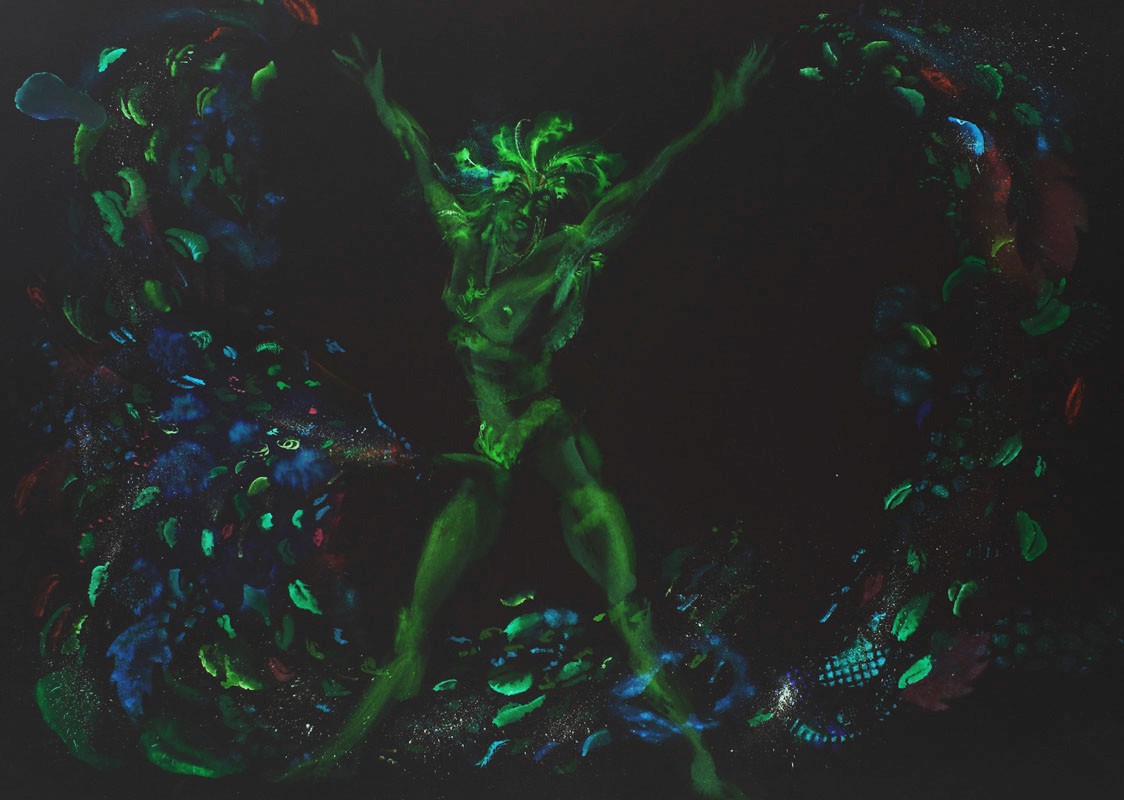
As part of my series of reflections on past commissions this post looks back 30 years to my attempted murder on 13 February 1996—an experience that led to a series of further traumas including my hand injury, consequent loss of career, mental breakdown, and psychiatric abuse. But alongside these traumas, throughout this period I also managed to create animation that celebrates strength and beauty, including a multiple award-winning commercial for Levis, illustrated here by a still that represents a strong, empowered woman.

As part of my series of reflections on past commissions this post looks back 30 years to my attempted murder on 13 February 1996—an experience that led to a series of further traumas including my hand injury, consequent loss of career, mental breakdown, and psychiatric abuse. But alongside these traumas, throughout this period I also managed to create animation that celebrates strength and beauty, including a multiple award-winning commercial for Levis, illustrated here by a still that represents a strong, empowered woman.

As part of my series of reflections on past commissions this post looks back 30 years to my attempted murder on 13 February 1996—an experience that led to a series of further traumas including my hand injury, consequent loss of career, mental breakdown, and psychiatric abuse. But alongside these traumas, throughout this period I also managed to create animation that celebrates strength and beauty, including a multiple award-winning commercial for Levis, illustrated here by a still that represents a strong, empowered woman.

As part of my series of reflections on past commissions this post looks back 30 years to my attempted murder on 13 February 1996—an experience that led to a series of further traumas including my hand injury, consequent loss of career, mental breakdown, and psychiatric abuse. But alongside these traumas, throughout this period I also managed to create animation that celebrates strength and beauty, including a multiple award-winning commercial for Levis, illustrated here by a still that represents a strong, empowered woman.

American Football/Blitz

Bafta graphic design

sport graphics

Trans World Sport

hand injury

career ending

sport animation
The United Nations: The Doomsday Clock

Jan 13, 2026

+ Read more

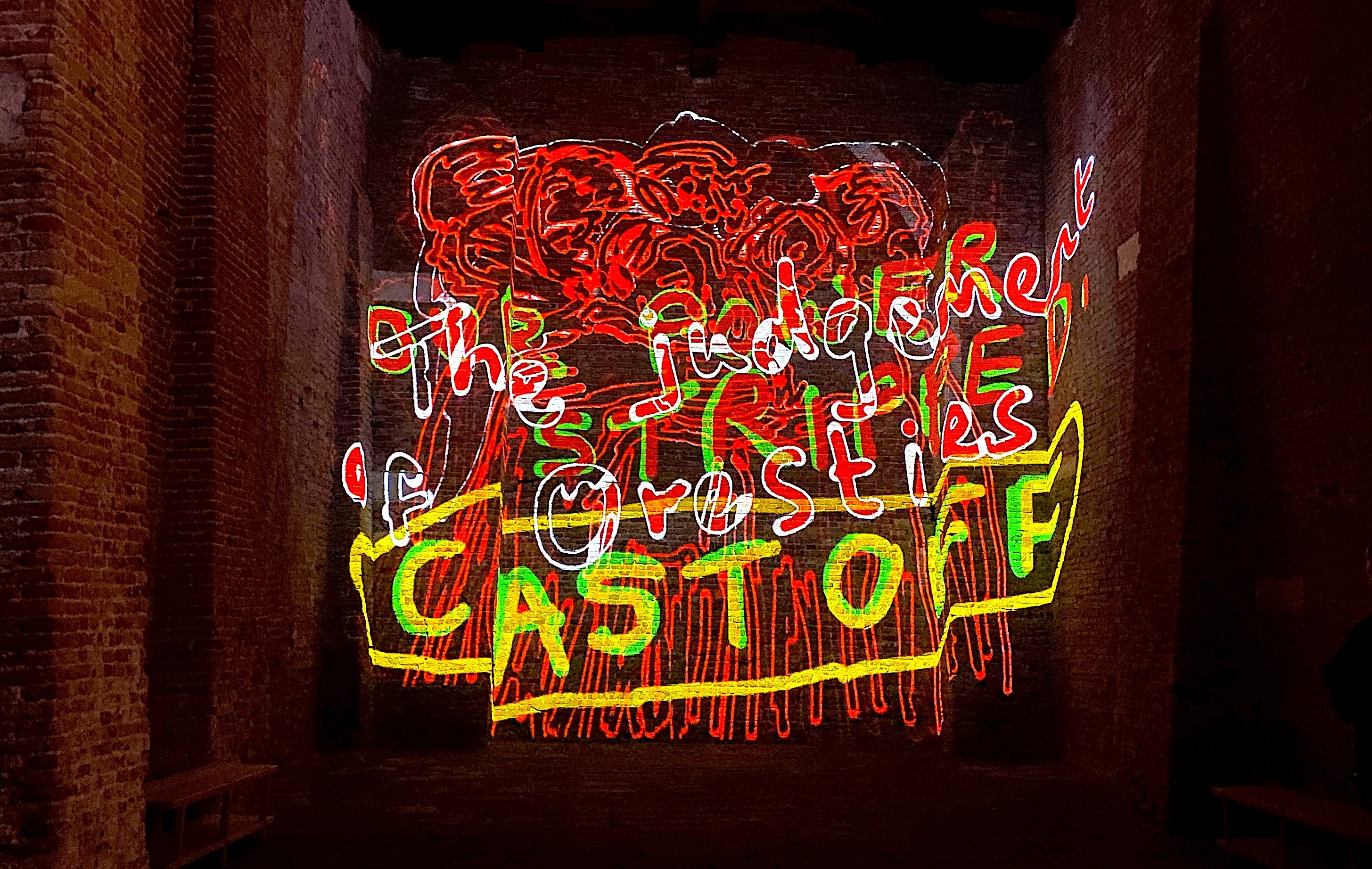
Reflections on making The Doomsday Clock, a film about multilateral disarmament that I was commissioned to make by the United Nations in 1986. The film is based on the actual Doomsday Clock, a device created in 1947 by the Bulletin of the Atomic Scientists to chart the likelihood of technological Armageddon (represented by midnight on the clock). In 1986, the clock was set at 3 minutes to midnight. In 2025, it was 89 seconds to. On Jan 27 2026, it was...

Reflections on making The Doomsday Clock, a film about multilateral disarmament that I was commissioned to make by the United Nations in 1986. The film is based on the actual Doomsday Clock, a device created in 1947 by the Bulletin of the Atomic Scientists to chart the likelihood of technological Armageddon (represented by midnight on the clock). In 1986, the clock was set at 3 minutes to midnight. In 2025, it was 89 seconds to. On Jan 27 2026, it was...

Reflections on making The Doomsday Clock, a film about multilateral disarmament that I was commissioned to make by the United Nations in 1986. The film is based on the actual Doomsday Clock, a device created in 1947 by the Bulletin of the Atomic Scientists to chart the likelihood of technological Armageddon (represented by midnight on the clock). In 1986, the clock was set at 3 minutes to midnight. In 2025, it was 89 seconds to. On Jan 27 2026, it was...

Reflections on making The Doomsday Clock, a film about multilateral disarmament that I was commissioned to make by the United Nations in 1986. The film is based on the actual Doomsday Clock, a device created in 1947 by the Bulletin of the Atomic Scientists to chart the likelihood of technological Armageddon (represented by midnight on the clock). In 1986, the clock was set at 3 minutes to midnight. In 2025, it was 89 seconds to. On Jan 27 2026, it was...

American Football/Blitz

Bafta graphic design

sport graphics

Trans World Sport

hand injury

career ending

sport animation
Mirror Images

Dec 26, 2025

+ Read more

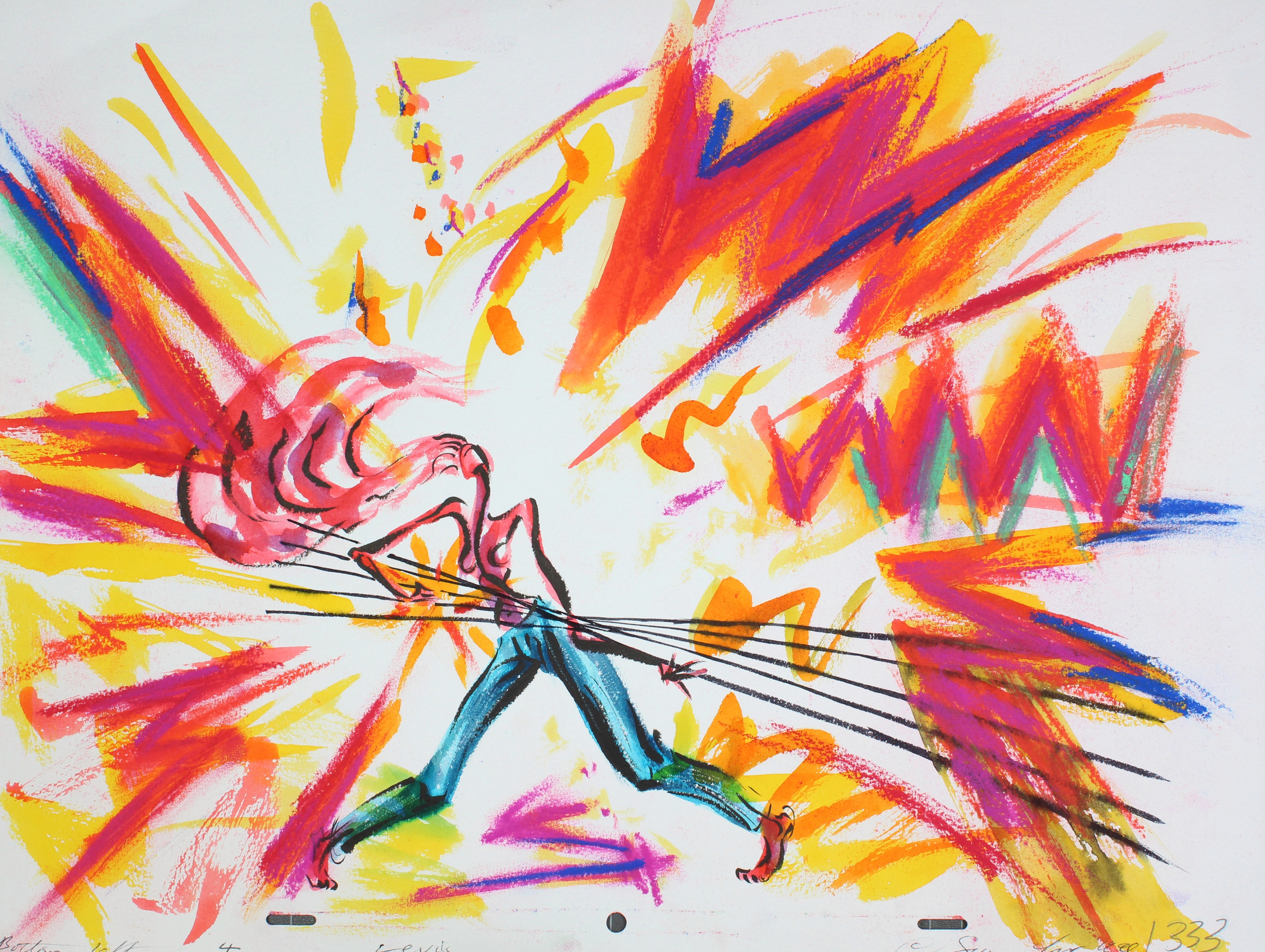
“There is but one reality and that is the truth and each of us are aspects of it — like facets of a gem. As filmmakers and artists, all we can hope to do is to be as true to ourselves as we are able, and in so doing find a resonance with others — like the refraction of light in a well-cut diamond. Only a facet that is truthfully defined can hope to reflect light inwards. The only thing that matters is the truth. Be true to oneself.”

“There is but one reality and that is the truth and each of us are aspects of it — like facets of a gem. As filmmakers and artists, all we can hope to do is to be as true to ourselves as we are able, and in so doing find a resonance with others — like the refraction of light in a well-cut diamond. Only a facet that is truthfully defined can hope to reflect light inwards. The only thing that matters is the truth. Be true to oneself.”

“There is but one reality and that is the truth and each of us are aspects of it — like facets of a gem. As filmmakers and artists, all we can hope to do is to be as true to ourselves as we are able, and in so doing find a resonance with others — like the refraction of light in a well-cut diamond. Only a facet that is truthfully defined can hope to reflect light inwards. The only thing that matters is the truth. Be true to oneself.”

“There is but one reality and that is the truth and each of us are aspects of it — like facets of a gem. As filmmakers and artists, all we can hope to do is to be as true to ourselves as we are able, and in so doing find a resonance with others — like the refraction of light in a well-cut diamond. Only a facet that is truthfully defined can hope to reflect light inwards. The only thing that matters is the truth. Be true to oneself.”

American Football/Blitz

Bafta graphic design

sport graphics

Trans World Sport

hand injury

career ending

sport animation